
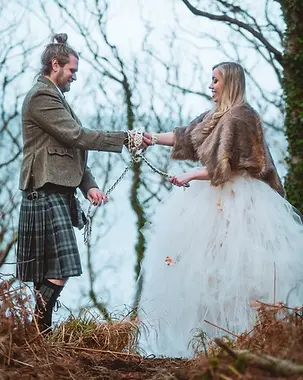

Handfasting
A Handfasting Ceremony is an ancient ritual that symbolizes the union of two people and their commitment to walk through life together. The tradition has deep roots in Celtic cultures, where couples would have their hands gently bound together with cords or ribbons as a symbol of their lives being woven together. In earlier times, handfasting was often used as a form of betrothal or marriage ceremony, representing the promise to share a path, support one another, and build a life side by side.
Today, handfasting has been beautifully revived as a meaningful and symbolic way to celebrate partnership. The ritual of binding the hands represents the joining of intentions, hearts, and futures. Couples often choose to include personal vows, readings, or symbolic gestures that reflect their story and the values they wish to carry into their shared life.
.png)

Handfasting ceremonies can take place in a variety of settings — in nature, in your home, or in a location that feels special to you both. The ceremony itself usually lasts around 45 minutes, as it is often part of a larger celebration where friends and family gather afterwards to share food and joy together.
Prices for Handfasting ceremonies start at 550 euros, and may vary depending on travel distance and any additional elements we choose to include. It is recommended to book at least two months in advance so we have time to thoughtfully craft a ceremony that truly reflects your relationship.
A handfasting is not only a celebration of love — it is a moment to pause, gather your community, and honor the beautiful commitment you are choosing to make together.
Disclaimer
I work as an independent celebrant and ceremony facilitator, and my work is not tied to any specific religion or spiritual tradition. My training was completed through the School of Celebrancy, run by the Order of Bards, Ovates and Druids (OBOD), an organization dedicated to honoring nature-based traditions and the art of meaningful ceremony.
While this background informs my approach, each ceremony is created with complete openness and respect for the people it is meant for. The language, symbols, and rituals can be adapted to reflect your personal beliefs, cultural background, and the intentions you wish to bring into the moment.
My role is simply to help hold a meaningful space where your story, your connection, and your celebration can unfold with authenticity, care, and presence.
Frequently asked questions
Do we need to prepare something for the ceremony?
Yes. The location, decoration, and any food or refreshments for the celebration should be organized by you. Many couples choose to decorate the space in a way that reflects their relationship and the atmosphere they want to create. I will bring the materials needed for the handfasting ritual itself.
Where can the Handfasting Ceremony take place?
Handfasting ceremonies can take place almost anywhere that feels meaningful to you — in nature, in a garden, at your home, or in a venue you have chosen for your celebration.
How far in advance should we book?
It is recommended to book at least three months in advance, so we have time to design the ceremony together and include the elements that feel most meaningful to you.
How long does the ceremony last?
The ceremony itself usually lasts around 45 minutes. Many couples include the handfasting as part of a larger celebration where guests stay afterwards for food, drinks, and time together.
Can we include personal vows or readings?
Absolutely. Many couples choose to include personal vows, poems, or readings from loved ones. These elements help make the ceremony even more personal and reflective of your relationship.
Do we need to follow a specific spiritual or cultural tradition?
No. While the ritual has Celtic roots, modern handfasting ceremonies are very adaptable. The words, symbols, and rituals can be shaped to reflect your values, beliefs, and personal story.
Can family members or friends participate in the ritual?
Yes. Loved ones can take part by offering readings, sharing blessings, or even placing the cords during the handfasting ritual. Including family and friends often makes the ceremony even more meaningful.
From the blog


